
Mood Maker – Pleasure Enhancing Intimacy Oil Review: Gentle Sensation That Falls Short of Reliable Arousal Support
This Mood Maker – Pleasure Enhancing Intimacy Oil review reflects real use over multiple weeks and varied moments — solo, partnered, relaxed, and planned. I tested this oil to see whether it does more than simply feel pleasant on the skin. The product positions itself as something that enhances mood and pleasure. In my experience, it delivered mild comfort and surface sensation, but it stopped short of providing consistent physical arousal support or meaningful enhancement that would distinguish it from basic body oils.
This review focuses on what the oil actually does during use, and where it does not meet deeper expectations for arousal support.
Why I Tried Mood Maker
I choose Mood Maker because of its promise to support both pleasure and intimacy. The description suggests adaptogens and botanicals that influence mood, emotion, and sensation. I wanted to see whether that translated into a product that genuinely supports physical responsiveness and comfort during intimate moments.
Rather than expecting dramatic effects, I approached this with practical curiosity. I wanted to know whether the product increased physical sensitivity, supported relaxation in a meaningful way, and contributed to arousal beyond scent and comfort.
First Impressions
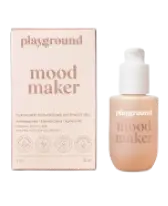
The packaging is visually appealing and gives off a lifestyle-oriented vibe rather than clinical seriousness. The bottle is lightweight, and the applicator is user-friendly. That ease of use can be important when intimacy products need to fit seamlessly into a moment.
Upon first opening the bottle, the scent was noticeable — floral and warm. For some users, a fragrance can enhance mood; for others, it may feel distracting, especially when trying to focus on physical sensation rather than smell.
The oil itself spreads easily and feels smooth on contact, leaving skin soft rather than greasy.
Initial Sensation
On first application, the oil felt comfortable. There was a mild warmth almost immediately, but it was subtle. Unlike products that produce clear sensory shifts, this warmth stayed low-grade rather than progressing into a deeper response.
Where some oils aim for warmth that leads to heightened physical awareness, this product’s effect remained surface-level. It felt pleasant, but it did not significantly increase sensitivity or presence.
Sensation vs Arousal
One of the main distinctions I noticed is that the oil provides sensation without corresponding arousal support. Sensation here means a feel on the surface of the skin — warmth, softness, scent — that can contribute to comfort or relaxation.
Arousal, in contrast, is a deeper physiological response involving increased sensitivity, blood flow, and interconnected body awareness. That deeper change did not clearly manifest with this oil.
In practical terms, the product made the skin feel pleasant, but it did not drive a noticeable shift in how the body responded to touch or contact.
Emotional and Contextual Impact
The oil’s scent and texture did have a calming effect in some moments. In settings where I was already relaxed, the product added to a sense of softness and ease. Calm can be valuable, and a relaxed body is often more responsive.
However, calm alone is not the same as arousal. Many products on the market promise to support mood as a path to arousal, but mood is only one part of the overall experience. Without a corresponding rise in physical responsiveness, the oil’s mood support felt more like ambiance than enhancement.
Partnered Use
During partnered moments, the oil’s texture and scent were comfortable. My partner commented that it felt smooth and pleasant on the skin. That’s a positive for users who value tactile ease.
Nevertheless, there was no consistent shift in physical response or engagement that could be directly tied to the oil. Touch felt comfortable, yes, but not noticeably more sensitive or exciting than without the product.
In situations where arousal naturally was higher due to connection, environment, and timing, the oil did not add a distinguishable layer of impact.
Solo Use
Pros and Cons
Pros- Smooth, non-greasy texture
- Pleasant scent for those who enjoy fragrance
- Comfortable on the skin
- Easy to apply and wash off
- Sensation remains surface-level
- No clear enhancement of physical arousal or responsiveness
- Scent may distract in delicate settings
- Results vary with context and mood, not product alone
Value and Worthiness
Mood Maker is mid-range in price. For users who want a scented body oil that makes skin feel soft and warm, it can be a pleasant occasional addition. It works well for massage and relaxation.
For those specifically seeking a product that reliably supports arousal and increased physical responsiveness, its value is limited. It provides comfort and ambiance more than functional enhancement.
Emotional and Practical Impact
This oil is best understood as a comfort product rather than a targeted arousal enhancer. It can contribute to mood and emotional ease, but it does not reliably change how the body responds physically during intimate moments.
Some products in this category aim for subtlety. This one stays at the surface without progressing into deeper tactile engagement.
Final Thoughts
This Mood Maker – Pleasure Enhancing Intimacy Oil review is grounded in real use and honest observation.
The product feels pleasant on the skin. It offers a mild warming sensation and a noticeable scent. It is easy to apply and generally comfortable.
However, it does not consistently support arousal in a noticeable or reliable way. Sensation stays at the surface, and physical responsiveness does not significantly increase as a direct result of use.
For users who enjoy mild warmth, scent, and a smooth texture, this oil may feel nice. For users seeking purposeful, measurable arousal support, it may feel underwhelming.
Understanding this distinction helps set realistic expectations and prevents frustration.